
What actually drives the number
Exterior painting is priced on labor, and labor is driven by how much surface there is, how bad its condition is, and how hard it is to reach. Paint is a small fraction of the bill.
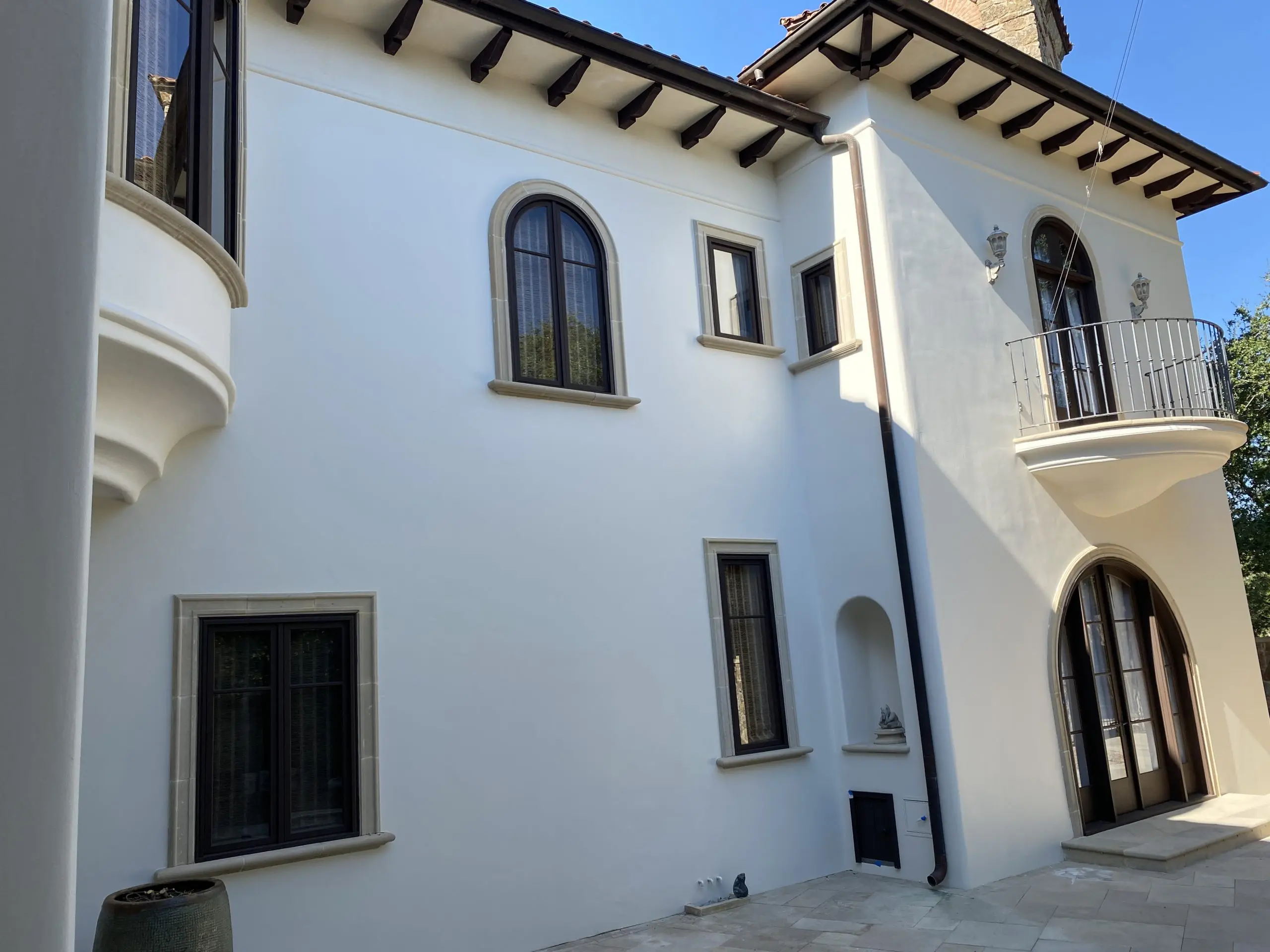
A single-storey Hardie home in good condition with a straightforward roofline is the cheapest scenario. A two-storey stucco home with rotted fascia, failing caulk, iron railings and a steep lot is at the other end. Both might be described as "3,000 square feet."
The five variables that matter most
Surface area, not floor area. A 2,400 square foot single storey has more roof-line and more wall than a 2,400 square foot two storey, but the two storey costs more because of access. Painters measure wall and trim, not the number on your tax record.
Substrate. Hardie, wood siding, stucco, brick and masonry each take a different system and a different amount of prep. Stucco with hairline cracking needs those addressed before coating. Wood needs more caulk and more sanding.
Condition. This is the biggest swing. Paint does not fail in the middle of a wall. It fails at the joints, the end grain, the south-facing fascia, and anywhere water was allowed to sit. If those areas are sound, prep is fast. If there is rot, the repair carpentry comes first.
Access. Ladder work is slower than ground work, and lift work is slower still. Steep lots, tall gables and tight side yards all add hours.
Coatings. Product choice matters more in Austin than in a milder climate, because of UV. A cheaper coating on a west-facing elevation is a false economy you pay for in five years.
What a written estimate should show you
Seek a written estimate from each contractor. It should include a breakdown of labor, material costs, the number of coats of primer and paint, the brand and model of materials, and a detailed description of the amount of surface preparation that will be done.
If a bid is a single number with no scope attached, you cannot compare it to anything. Two bids $2,000 apart often turn out to be two completely different jobs, and the cheaper one frequently excludes the prep that makes the expensive one last.
Where homeowners get surprised
Rot repair is the most common change to an exterior estimate, because the extent of it is genuinely not visible until the old coating comes off. A good proposal states an allowance for it up front rather than pretending it will not happen.
The second is elevation-specific work. Your west wall may need an extra coat when the north wall does not. That is not upselling, it is the reason the west wall failed first in the first place.